Horticultural Sand
Horticultural Sand Improves Drainage and Supports Root Stability in Every Soil Mix
Horticultural sand is a clean, coarse mineral substrate that improves drainage, adds weight, and keeps soil open and breathable. Especially valuable in cactus, succulent, and terrarium soil blends, this non-compacting material helps stabilize root systems, loosen heavy mixes, and create space for air and water to flow freely through the root zone.
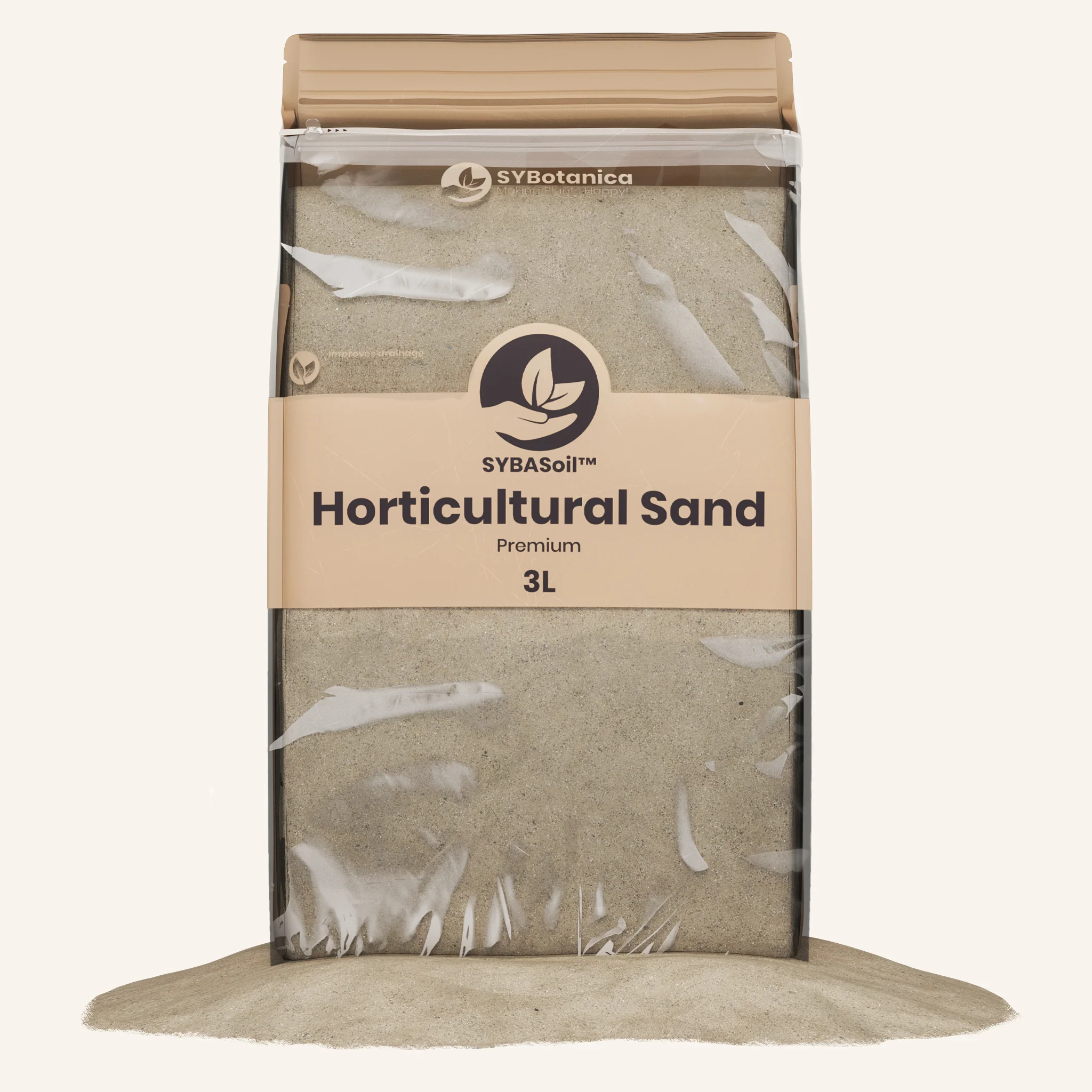
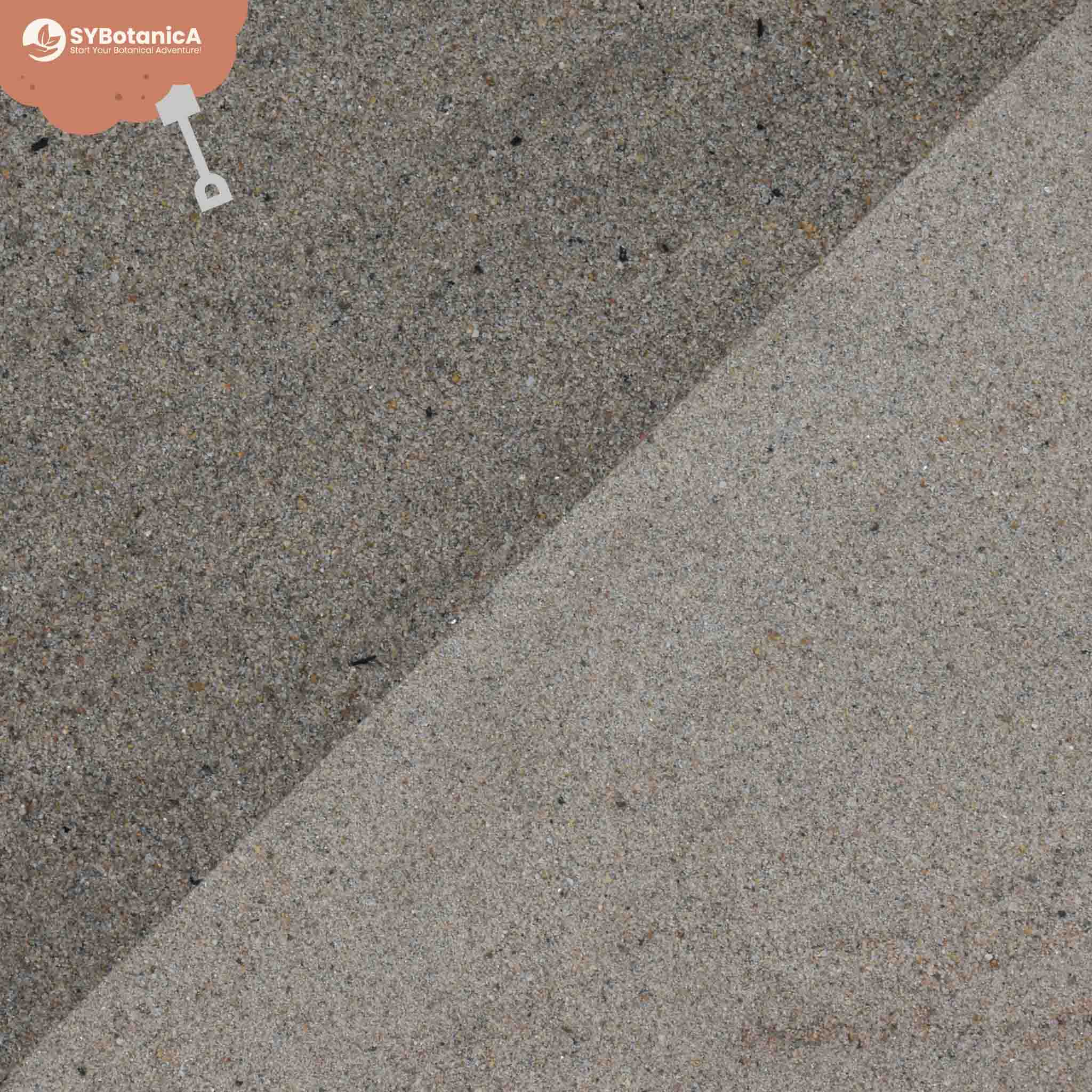
At Sybotanica, we offer high-grade horticultural sand in convenient, pre-washed bags. It’s free from salts, organic debris, and clay fines—just sharp, natural sand sized for indoor plant care, ready to use in your next mix or terrarium build.
The Benefits of Horticultural Sand in Soil
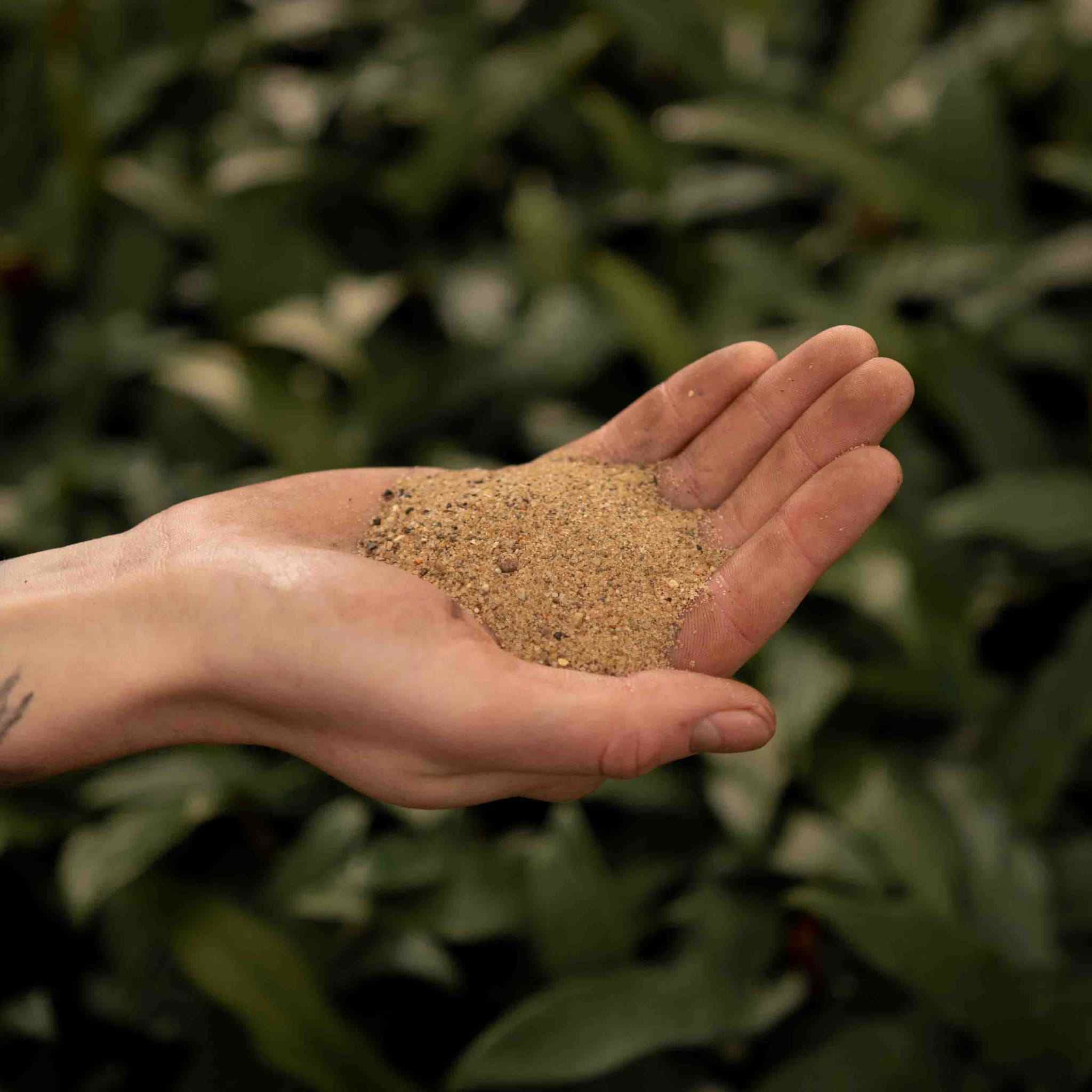
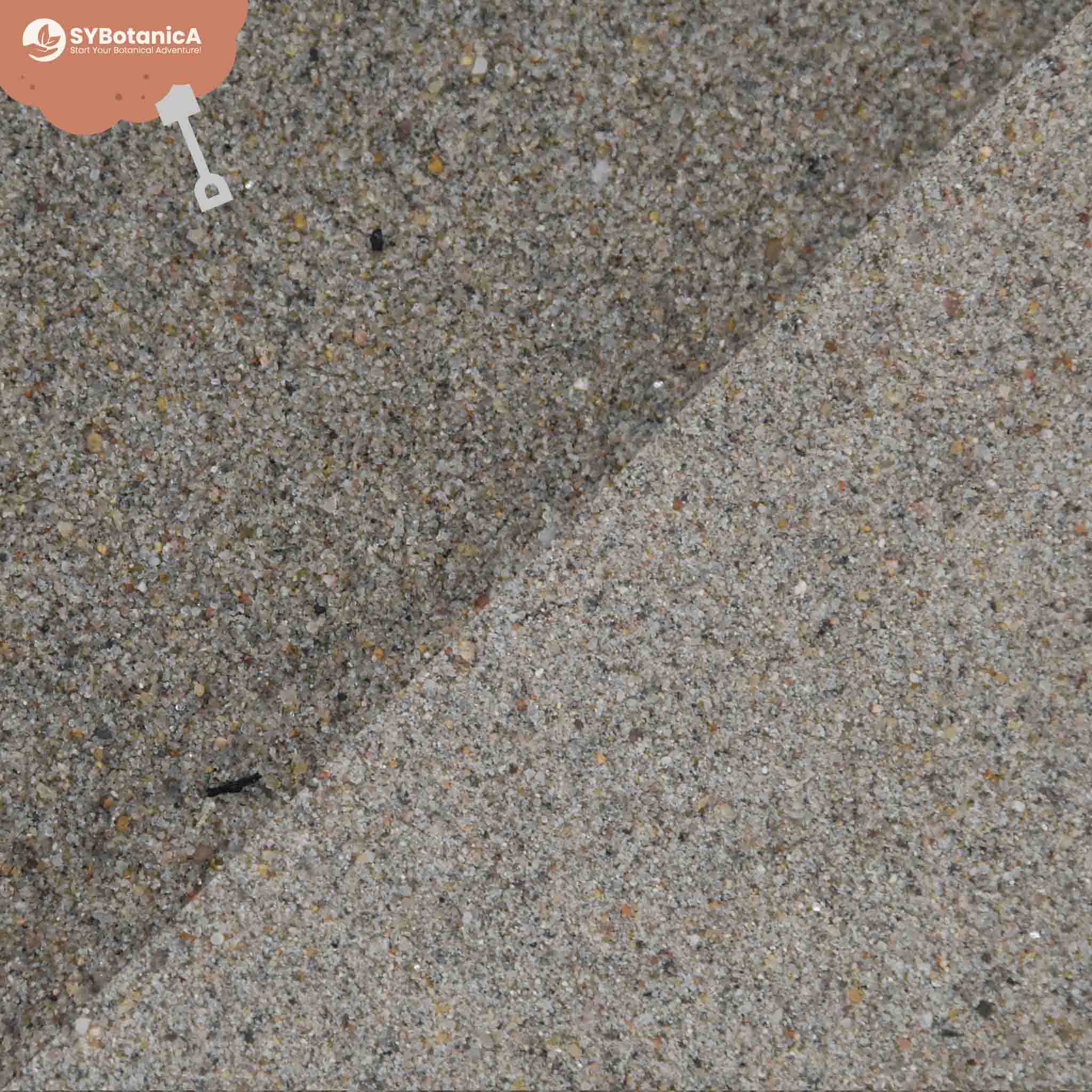
Unlike beach sand or fine river sand, horticultural sand is made up of sharp-edged, irregular grains that hold their shape in soil and don’t compact. This creates tiny air pockets throughout your mix, giving roots access to oxygen and helping water drain freely—without collapsing structure over time.
Why Choose Horticultural Sand?
-
Improves drainage and reduces the risk of root rot
-
Increases soil weight for anchoring top-heavy plants
-
Prevents soil compaction in long-term containers
-
Enhances soil aeration for root-zone activity
-
Ideal for cactus and succulent soil mixes
- Fully inorganic and pH-neutral
Sand can be used on its own in gritty mixes or combined with pumice, perlite, lava gravel, and worm castings to balance airflow, nutrient access, and water flow.
Heavy Soils for Better Stability
Top-heavy plants—like mature aloes, large cacti, euphorbias, and columnar succulents—often become unstable in lightweight potting mixes. Adding coarse sand to the base or core of the mix introduces the weight needed to hold roots in place and prevent wobbling. It also helps fill gaps in large containers, supporting denser root systems and making them less prone to tipping or shifting during watering.
This simple addition increases root zone support and reduces transplant shock in big or older plants that require more structural soil integrity.
Ideal for Cacti, Succulents, and Terrariums
Cacti and succulents thrive in soils that drain fast and stay dry between waterings. Fine peat-heavy mixes hold too much moisture, which leads to root rot and mold. Adding 20–50% sharp sand to your blend increases both drainage and soil texture, allowing roots to access water briefly before the mix dries out evenly.
In terrariums, sand serves as a functional and decorative layer, providing a clean base for stacking materials or adding visual contrast in layered designs. Its grit sand texture also works as a top dressing to reduce fungus gnats and suppress surface algae growth.
How to Use Horticultural Sand:
-
For cacti and succulents: Mix 10–20% sand with cactus soil or potting blend for fast-draining structure
-
For terrariums: Use a 1–3 cm layer as a visual and functional barrier between layers
-
For anchoring weak plants: Mix 15–25% sand into the base of your potting soil to increase weight and stability
-
In propagation: Combine with perlite or pumice to create a breathable rooting medium for stem cuttings
Because sand is inert and doesn’t break down over time, it provides long-lasting structure and doesn’t interfere with plant nutrition or soil biology.
Combine With Organic Additives for Balanced Plant Health
While horticultural sand provides weight, drainage, and structural benefits, it’s purely mineral-based and contains no nutrients. For best results, combine it with worm castings or compost to introduce organic matter and beneficial microbial life. This pairing gives your plants the full spectrum of what they need—airflow and anchoring from sand, and nutrient access and bioactivity from castings.
Sybotanica’s Take: Simple Materials With Serious Impact
At Sybotanica, we love using horticultural sand as a straightforward way to elevate custom mixes. It’s one of the simplest, most reliable ingredients for improving soil performance—especially when paired with larger mineral substrates like pumice or lava gravel. For cacti lovers, succulent collectors, and terrarium builders alike, it’s a must-have material that helps prevent problems before they start.
Original: $7.99
-70%$7.99
$2.40Product Information
Product Information
Shipping & Returns
Shipping & Returns
Description
Horticultural Sand Improves Drainage and Supports Root Stability in Every Soil Mix
Horticultural sand is a clean, coarse mineral substrate that improves drainage, adds weight, and keeps soil open and breathable. Especially valuable in cactus, succulent, and terrarium soil blends, this non-compacting material helps stabilize root systems, loosen heavy mixes, and create space for air and water to flow freely through the root zone.
At Sybotanica, we offer high-grade horticultural sand in convenient, pre-washed bags. It’s free from salts, organic debris, and clay fines—just sharp, natural sand sized for indoor plant care, ready to use in your next mix or terrarium build.
The Benefits of Horticultural Sand in Soil
Unlike beach sand or fine river sand, horticultural sand is made up of sharp-edged, irregular grains that hold their shape in soil and don’t compact. This creates tiny air pockets throughout your mix, giving roots access to oxygen and helping water drain freely—without collapsing structure over time.
Why Choose Horticultural Sand?
-
Improves drainage and reduces the risk of root rot
-
Increases soil weight for anchoring top-heavy plants
-
Prevents soil compaction in long-term containers
-
Enhances soil aeration for root-zone activity
-
Ideal for cactus and succulent soil mixes
- Fully inorganic and pH-neutral
Sand can be used on its own in gritty mixes or combined with pumice, perlite, lava gravel, and worm castings to balance airflow, nutrient access, and water flow.
Heavy Soils for Better Stability
Top-heavy plants—like mature aloes, large cacti, euphorbias, and columnar succulents—often become unstable in lightweight potting mixes. Adding coarse sand to the base or core of the mix introduces the weight needed to hold roots in place and prevent wobbling. It also helps fill gaps in large containers, supporting denser root systems and making them less prone to tipping or shifting during watering.
This simple addition increases root zone support and reduces transplant shock in big or older plants that require more structural soil integrity.
Ideal for Cacti, Succulents, and Terrariums
Cacti and succulents thrive in soils that drain fast and stay dry between waterings. Fine peat-heavy mixes hold too much moisture, which leads to root rot and mold. Adding 20–50% sharp sand to your blend increases both drainage and soil texture, allowing roots to access water briefly before the mix dries out evenly.
In terrariums, sand serves as a functional and decorative layer, providing a clean base for stacking materials or adding visual contrast in layered designs. Its grit sand texture also works as a top dressing to reduce fungus gnats and suppress surface algae growth.
How to Use Horticultural Sand:
-
For cacti and succulents: Mix 10–20% sand with cactus soil or potting blend for fast-draining structure
-
For terrariums: Use a 1–3 cm layer as a visual and functional barrier between layers
-
For anchoring weak plants: Mix 15–25% sand into the base of your potting soil to increase weight and stability
-
In propagation: Combine with perlite or pumice to create a breathable rooting medium for stem cuttings
Because sand is inert and doesn’t break down over time, it provides long-lasting structure and doesn’t interfere with plant nutrition or soil biology.
Combine With Organic Additives for Balanced Plant Health
While horticultural sand provides weight, drainage, and structural benefits, it’s purely mineral-based and contains no nutrients. For best results, combine it with worm castings or compost to introduce organic matter and beneficial microbial life. This pairing gives your plants the full spectrum of what they need—airflow and anchoring from sand, and nutrient access and bioactivity from castings.
Sybotanica’s Take: Simple Materials With Serious Impact
At Sybotanica, we love using horticultural sand as a straightforward way to elevate custom mixes. It’s one of the simplest, most reliable ingredients for improving soil performance—especially when paired with larger mineral substrates like pumice or lava gravel. For cacti lovers, succulent collectors, and terrarium builders alike, it’s a must-have material that helps prevent problems before they start.


